The most memorable spaces make us picture a different way of life. Nothing about us is inherently altered when we enter them. We haven’t suddenly become people who read before bed, linger over breakfast or take long baths in the middle of the afternoon. We have simply gone somewhere that makes those things feel possible.
Why does it feel easier to restore our sense of self when we escape to somewhere else?
Our lives are designed around availability. Work follows us home and our phones follow us everywhere. Even our leisure time has been ingrained with performance. Between tracking our stats and documenting our vacations hoping to earn gold stars for optimizing the things we do to reset, Somewhere along the way, we begin to treat rest, creativity, and connection as destinations.
A break will come when things calm down and the house is clean, when the deadline passes. When we can get away, we allow travel to create one of the few socially agreed upon boundaries around our daily lives. An out-of-office reply and a small tag hanging on the door handle is enough to communicate something that feels hard to say to ourselves.
Do not disturb.
We need the distance to give us permission.
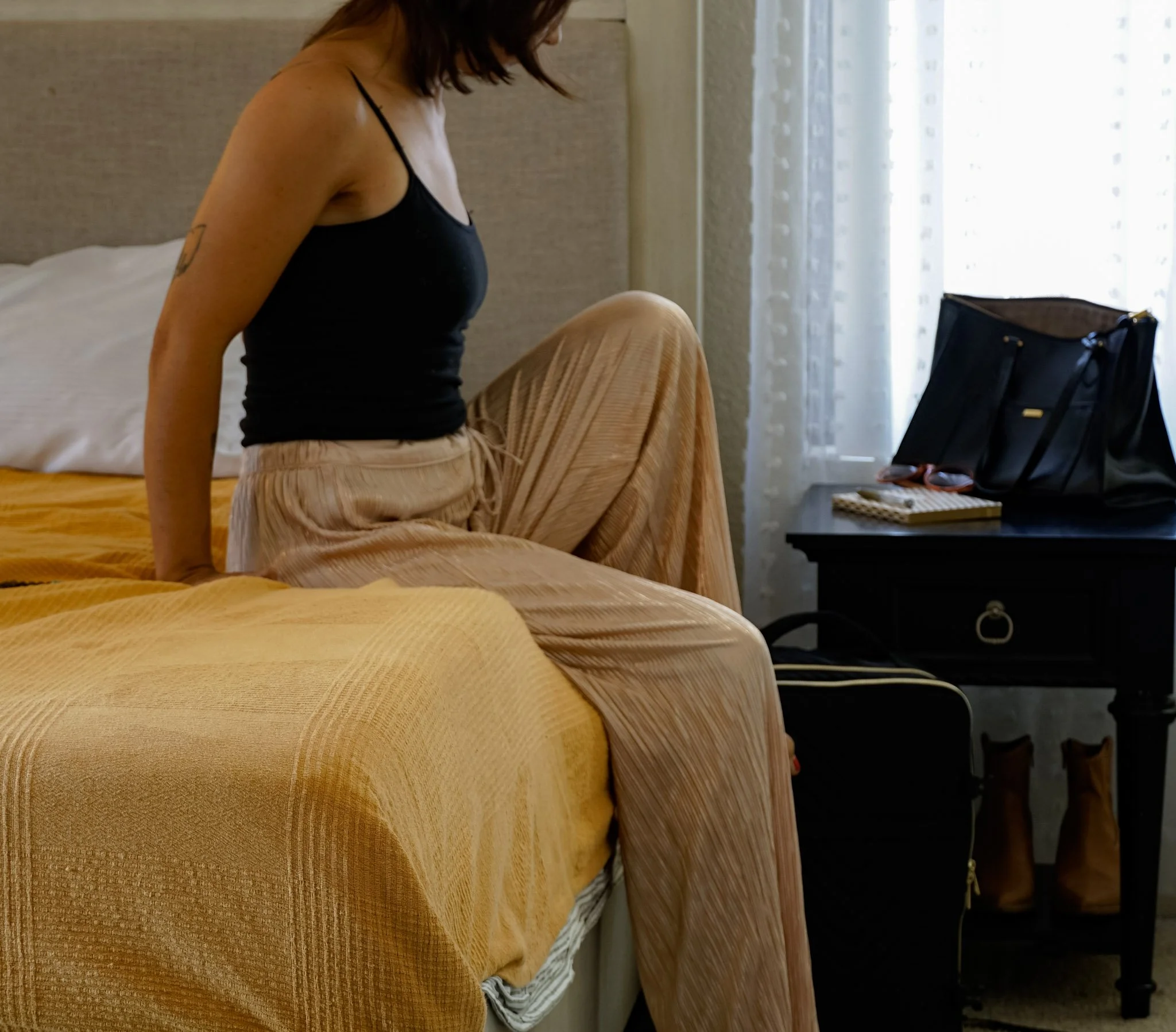
When we arrive at a hotel our behavior shifts almost immediately. We sleep longer between clean sheets and blackout curtains, enjoy food we wouldn’t normally have, and finally read the book we have been carrying around for three months. We give ourselves the permission to disappear; into long showers and baths filled to the top. Walking around places with no particular routes, just to look around and see what we can find.
These small rituals seem ordinary at home and yet when we are somewhere else, we luxuriate. The question is why?
On the surface it may seem obvious that travel temporarily suspends the obligations attached to our normal environments. There isn’t a basket of laundry and a pile of dishes to be done here. The kitchen will be cleaned by someone else and our ordinary routines have been interrupted.
There is something else is quietly working in the background.
Hospitality is form of behavioral design.
We unknowingly let the space suggest what kind of behavior belongs there. A chair positioned by the window invites us to sit and the sun tells us whether to wake up or wind down. The minibar, a robe, and perfectly selected textures make a silent nudge.
Environmental psychology has examined the relationship between physical surroundings and human behavior.
We understand how light can influence circadian rhythms and sleep. How noise affects stress and restoration. We accept that access to nature has been associated with psychological well-being. Good hospitality harnesses those relationships and turns it into an experience.
A hotel that goes beyond decoration and designs the conditions for a particular way of being inside it; understand that guests remember how a place makes them feel.
This complicates our relationship with luxury. Because luxury is most commonly communicated through excess. Contemporary hospitality has the opportunity to sell something much harder to acquire.
Less.
Wellness tourism has grown steadily around the desire for less. As travelers seek retreats, spas, sleep programs, digital detoxes, and destinations built around restoration. Rest alone has become a consumer product.
Why are we willing to cross borders to protect the conditions that we struggle to create boundaries for in our daily lives?
The luxury of a hotel stay is more about having the time to enjoy the amenities and the freshly laundered sheets, or eating breakfast in bed without simultaneously doing something else.
The luxury is permission.
Traveling gives us the unusual chance to meet ourselves again outside of the context of our routines. We even pack differently than we dress at home. We walk more and take note of our surroundings, the architecture and the vibes. Willing to sit at bar alone, behaving as if we were someone else simply because no one knows who we are.
We become curious again, taking photographs of ordinary buildings we are seeing in circumstances beyond our ordinary lives, talking to strangers, and for a few days we see past the margins and experience that something else is possible.
There is a reason people return for trips declaring that they are going to change their lives. The best hotels participate in that fantasy and let us see who we might be beneath the need to perform who we already are.
Eventually we return home. The laundry fills up and the email notifications return. We end up treating the person we were while traveling as something that belonged to that particular room.
Hospitality, when done well, leaves evidence that the environment showed us a way of living.

It’s possible because everything is unfamiliar. At home we know our surroundings so deeply, where the phone charges and which seat at the table is the most inviting, things go unnoticed. Maybe we slept better because the room was dark, maybe we read because the book was all we had to distract us.
Perhaps the we slowed down because the environment gave us cues that slowing was allowed.
If design can encourage us to rest, create, and connect while checked-in, we can aim to carry some of those conditions long after we have checked-out.
Design is NEVER neutral.